Long Island summers are humid, the pavement gets hot enough to fry an egg on, and between the beach, the pool and the backyard sprinkler, dogs here spend the season wet, sandy and happy. Summer is also when we get the most questions about grooming, and when a few well-meaning decisions can make a dog less comfortable rather than more. Here is how we think about keeping a dog comfortable from June through September, and what a summer groom in the van involves.
Short trims are fine; shaving a double coat is not
The first question every summer is some version of "can you shave him down?" For some dogs the answer is yes. A Poodle, a Doodle, a Shih Tzu, a Maltese or any other single-coated dog whose hair grows continuously can be trimmed short for summer without harm. If you have a Doodle, a shorter summer cut is one of the kindest things you can do, because that coat holds water and mats quickly when it is damp.
For double-coated dogs the answer is no, and we will explain why rather than just refuse. A Husky, a Golden Retriever, a German Shepherd or a Corgi has an undercoat that insulates in both directions. It holds warmth in winter, and in summer, once the winter undercoat has shed out, the remaining coat shields the skin from the sun and slows the transfer of heat from the air to the body. Shaving takes away that shield, exposes pale skin to sunburn, and often leads to a patchy regrowth that sheds more and insulates worse. The dog you shaved to cool it down can end up hotter.
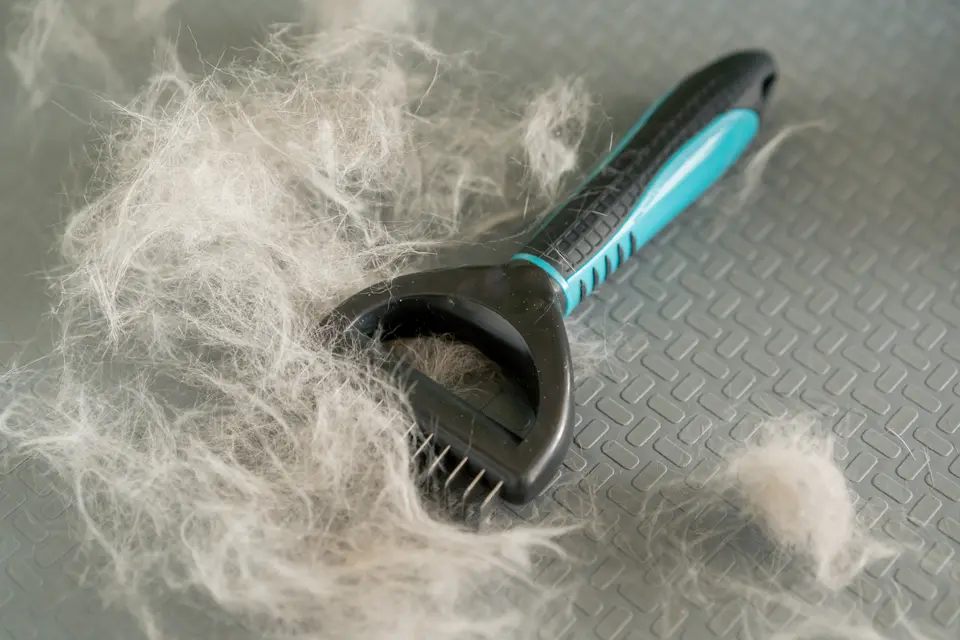
What helps a double-coated dog in summer is a thorough deshedding groom, which removes the dead undercoat and lets air circulate against the skin. We wrote more about this in our article on shedding season.
Paw pads and hot pavement
Asphalt in full sun gets far hotter than the air, and a dog's pads will burn on it. The test is simple: put the back of your hand flat on the pavement for seven seconds. If it is too hot for you, it is too hot for the dog. Walk early or after sunset, stick to grass and shade when you can, and watch for limping, licking at the feet or pads that look red, blistered or peeling. A burned pad is a vet visit, not something to treat at home.
During a summer groom we trim the hair between the pads so it does not mat into hard clumps, and we check the pads for cracks, cuts and anything stuck between the toes. Pad health goes into the health report we give you at the end of every groom.
More baths after the beach, pool or sprinkler
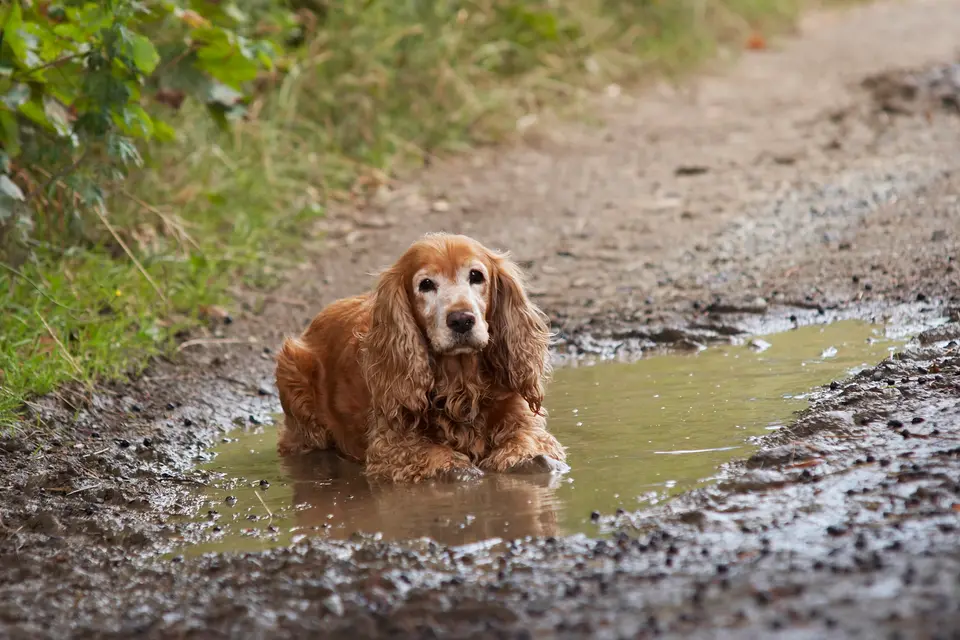
Salt water, chlorine and sand are all hard on a coat and skin if left to dry in place. Salt dries the skin and makes the coat stiff and sticky. Chlorine strips the natural oils and leaves the skin itchy. Sand gets down to the skin, rubs, and holds moisture against it, which is a recipe for hot spots, especially in the armpits and under the collar on a thick-coated dog.
The fix is not a full shampoo every time. After a swim, a thorough rinse with plain fresh water from the hose, all the way down to the skin, gets most of the salt, chlorine and sand out. Follow it with a good toweling and, if the coat is thick, a brush once the dog is dry. Save shampoo baths for every few weeks, or when the dog genuinely smells like low tide, because over-bathing dries the skin out too. Our article on bathing at home walks through the details.
In the van, a summer bath uses the same humane process as always, protecting the eyes and ears, with a conditioner that puts moisture back into a coat that has spent a month in the pool. If the skin is already dry or irritated, ask us for a hypoallergenic or medicated shampoo. We carry both at no extra charge.
Hydration and the signs of overheating
Dogs cannot sweat the way we do, so panting does most of their cooling. Fresh water should be available all day, and on walks it is worth carrying a collapsible bowl. Heavy panting with a wide, flat tongue, thick drool, bright red gums, staggering or lying down and refusing to move are signs to stop immediately, get the dog into shade or air conditioning, offer water, and call your vet. Heatstroke moves fast.
A groom itself is not a heat risk in our van. The van is climate controlled, the dryer we use is warm air rather than hot, and we never cage dry. One pet in the van at a time means your dog is not waiting in a warm space for its turn.
Evening appointments in hot weather
We offer day, evening and weekend appointments year round, and in summer a lot of customers move their groom to the evening for a practical reason: the walk from the house to the van is cooler, the driveway has had a chance to cool, and the dog goes back inside into a quiet evening rather than a hot afternoon. For dogs who struggle with heat, or seniors who take a little longer to settle, an evening slot is often the easiest choice. Our senior pet grooming page covers how we handle older dogs, and summer is one season where that extra care really matters.
If you are on the fence about a summer trim, book the groom and ask us at the start. The pet care consultation is part of every appointment, and if the honest answer is "leave the coat long and deshed it," that is what we will say.