Twice a year, usually in spring and again in fall, a lot of our customers call with the same sentence: "I cannot keep up with the hair." If you share your home with a Golden Retriever, a Husky, a German Shepherd or any other double-coated dog, you know exactly what they mean. This is the coat blow, and it is a normal part of how these dogs are built. Here is what is happening, what you can do at home, and what we do in the van.
What a double coat is, and why it blows
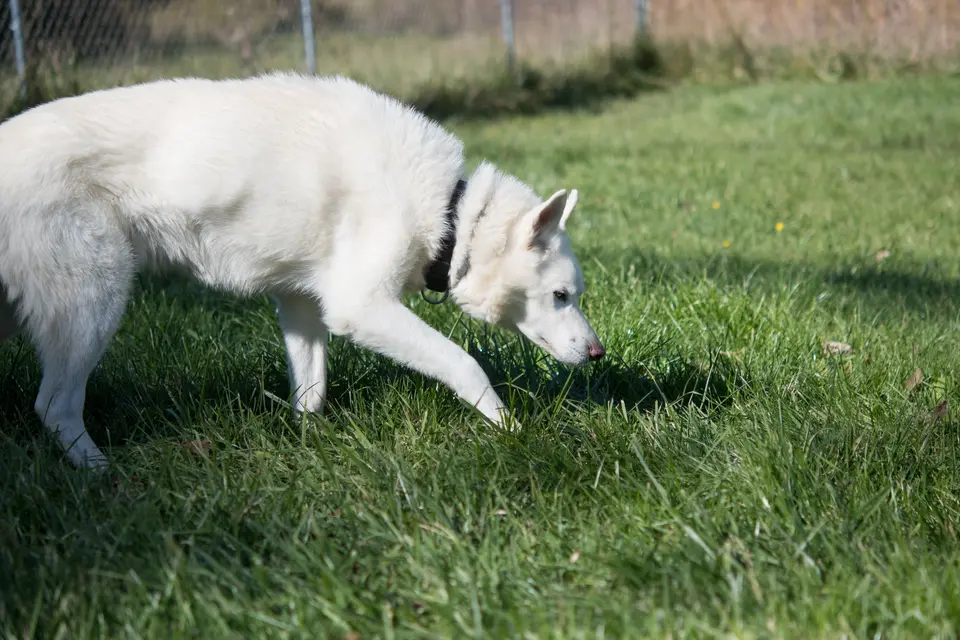
A double-coated dog carries two layers of hair. The outer layer is longer, coarser guard hairs that shed water. Underneath is a dense, soft undercoat that traps air against the skin and insulates the dog, keeping heat in during winter and, perhaps surprisingly, helping keep heat out during summer.
That undercoat is seasonal. As the days lengthen in spring, the dog's body releases the thick winter undercoat so a lighter summer coat can grow in. In fall the process reverses, and the lighter coat gives way to the heavier one. Because it comes out in large amounts over a few weeks, it feels dramatic.
A sudden change in coat, bald patches or very dry, flaky skin is a different matter, and a reason to ask your vet.
Brushing at home during the blow
Brushing is the single most useful thing you can do, and during a coat blow it is worth doing every day or every other day. Loose undercoat that stays in the coat packs down against the skin, holds moisture and can start the matting process, especially behind the ears, under the collar and in the armpits.
- Use an undercoat rake or a slicker brush, not a flat bristle brush, which skims the top layer and misses what you are after.
- Work in sections and brush with the lay of the coat, lifting the guard hairs so the tool reaches the undercoat.
- Keep sessions short, ten minutes or so. A few short sessions beat one long struggle.
If you hit a mat, do not cut it out with scissors. Skin sits closer to the base of a mat than most people expect. Work it with your fingers and a comb, and if it will not give, leave it for us.
What our deshedding add-on actually does
Deshedding is a $30 add-on to any dog groom, and during the coat blow it is the one we recommend most. It is not a different haircut. It is a longer, more thorough process built around getting the loose undercoat out of the coat and into the van instead of your house.
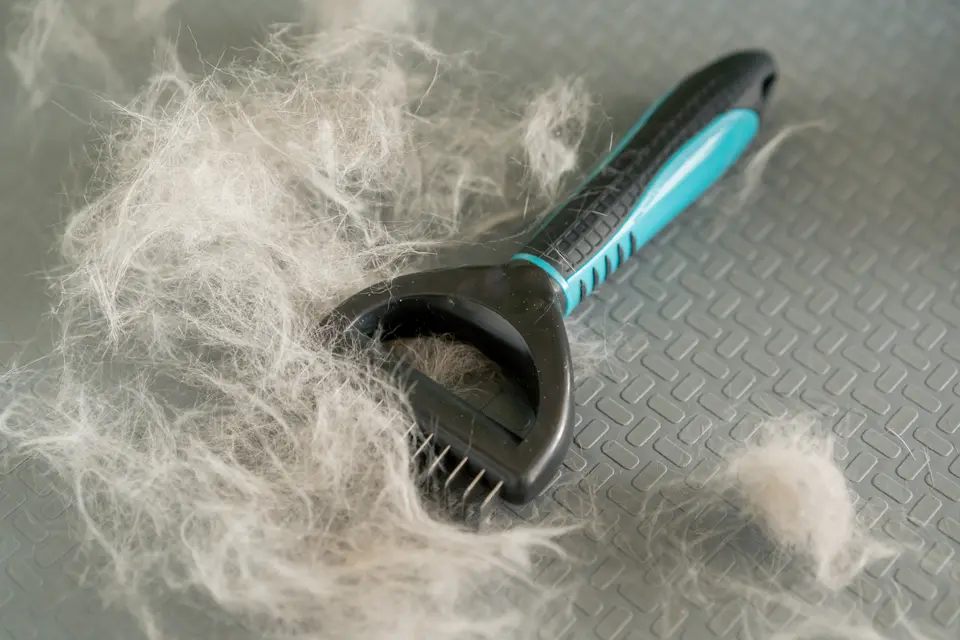
We start with a bath using a shampoo and conditioner chosen to loosen the undercoat, then do a full warm air fluff dry. The dryer does a lot of the work: the air lifts the guard hairs and blows out an astonishing amount of loose undercoat before a tool ever touches the dog. After the dry we go over the whole coat with deshedding tools, section by section, pulling out what the dryer loosened and working on any areas that were starting to pack. The result is a dog who sheds noticeably less for the next couple of weeks and a coat that lies flat.
Because every pet in our van is groomed one at a time, start to finish, your dog is not sitting in a kennel between steps while the undercoat settles back in. You can see all the add-ons on our services page and current prices on the pricing page.
Please do not shave a double coat
Every spring someone asks us to shave their Husky or Golden "to help with the heat and the hair." We understand the thinking, but shaving a double coat is usually the wrong answer.
The undercoat is what sheds, and shaving removes the guard hairs along with it. Guard hairs grow back slowly and the undercoat grows back fast, so a shaved double-coated dog often ends up with a patchy, woolly coat that sheds more and insulates worse. Some never get their original coat back. Shaving also removes the layer that protects the skin from sunburn, and because the coat was helping keep heat out as well as in, a shaved dog can end up less comfortable in summer.
What actually helps is removing the dead undercoat and leaving the guard hairs alone, which is exactly what deshedding does. The exceptions are medical: a coat so matted it cannot be brushed out, or a vet's instruction.
A vacuum-and-brush routine that keeps the house livable
Between grooms, the trick is to get ahead of the hair rather than chase it:
- Brush outside or on a washable mat, so the undercoat you remove is not just relocated to the rug.
- Vacuum right after brushing, while the loose hair is concentrated in one spot, rather than waiting for it to spread.
- Hit the dog's favorite resting spots daily during the blow. A quick pass there does more than a weekly whole-house vacuum.
- Keep a rubber grooming glove by the back door. Thirty seconds with it after a walk takes off a surprising amount.
- Book a groom near the start of the blow, not the end. One deshedding groom early, followed by home brushing, beats trying to recover after three weeks of buildup.
When to book
If the undercoat starts coming out in clumps when you pet your dog, that is the moment. We offer day, evening and weekend appointments across nearly all of Nassau County and western Suffolk, and deshedding can be added to any groom when you book. If you are not sure how often your dog's coat needs attention, our article on how often to groom your dog is a good starting point, and we are always happy to look at the coat at the first appointment and tell you plainly what it needs.