Long Island is a wonderful place to walk a dog, and it is also tick country. Between the wooded trails of the North Shore, the tall grass along the South Shore marshes and the shrubs at the edge of a backyard, there is no shortage of places for a tick to wait. Fleas find their way into Long Island homes every year too. We see both in the van, and this article is our honest answer to the question we hear most: what can a groom actually do about fleas and ticks, and what can it not?
Tick season on Long Island
Ticks here are most active from spring through fall, and they do not disappear entirely in a mild winter. Ticks do not jump or fly. They climb onto a blade of grass or a low branch and wait for something warm to brush past, then grab on. That is why dogs who walk through brush and tall grass pick them up far more often than dogs who stay on pavement.
Once on a dog, a tick crawls toward warm, thin-skinned places: the ears, under the collar, the armpits, between the toes, around the eyes and lips, under the tail and in the groin. Those are the spots we check first during a groom and the spots you should check after every walk.
Fleas: fewer walks, more company
Fleas usually arrive through contact with another animal or a place other animals have been: a dog park, a friend's house, a stray cat under the deck. The adult fleas you see on the dog are a small part of the problem. Eggs fall into carpet, bedding and floorboards and hatch there, which is why a flea problem that seems to be about the dog is really about the house. The telltale signs are sudden scratching and chewing, especially at the base of the tail, and small dark specks in the coat that turn reddish on a wet paper towel. That is flea dirt, and it means there are fleas even if you cannot find one.
What the flea and tick treatment during a groom does
Our flea and tick treatment is a $30 add-on to any dog groom. Here is what you are paying for:
- A bath with a shampoo formulated to kill fleas and ticks that are on the dog at the time of the groom. The shampoo stays on the coat for a few minutes before we rinse.
- A hands-on check of the whole coat and skin, with particular attention to the places listed above.
- Removal of any ticks we find, with a proper tool, grasping close to the skin and pulling straight out so the mouthparts come with the tick.
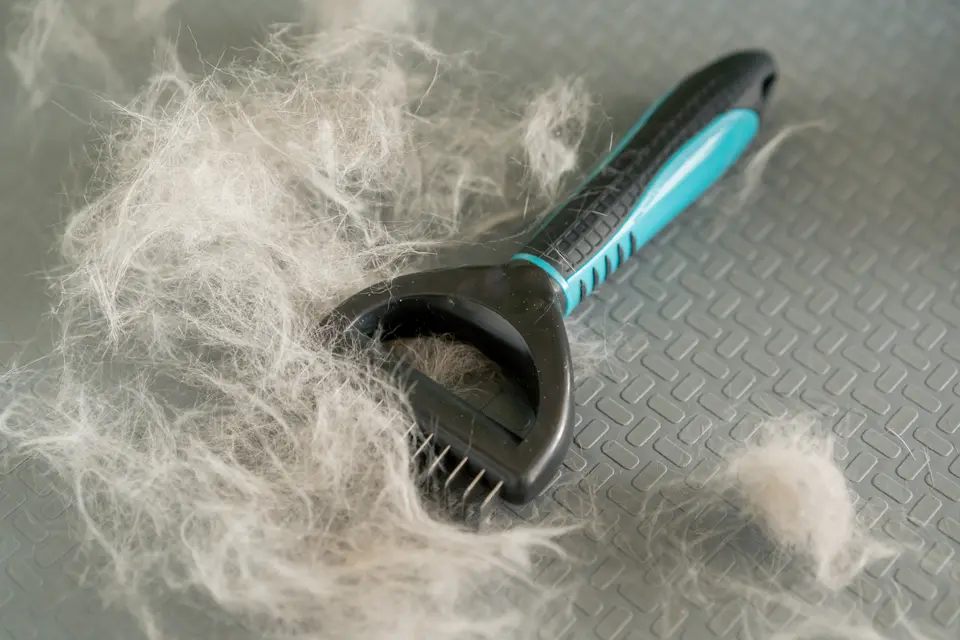
- A flea comb pass to pull out dead fleas and flea dirt so the dog does not go back inside with the evidence still in the coat.
Because our van is self-contained and we groom one pet at a time, start to finish, your dog is never sharing a kennel or a table with another animal, and we clean the van between appointments.
What the treatment does not do
A flea and tick bath is not prevention. It kills what is on the dog today. It does not stop a tick from attaching on tomorrow's walk, and it does nothing about the flea eggs already in your carpet. Ongoing prevention, whether a monthly topical, an oral medication or a collar, is a conversation for your vet, who knows your dog's weight, age, health history and other medications. We will never tell you which preventive to use.
A groom is not a treatment for fleas in the home. If we find fleas, the bath handles the dog, but you will need to wash bedding in hot water, vacuum thoroughly and often, and talk to your vet about a product that breaks the life cycle. Treating the dog and skipping the house is how people fight fleas for months.
We cannot tell you whether a tick made your dog sick. Long Island has tick-borne illnesses, which is reason enough to take ticks seriously, but diagnosing one is well outside what a groomer does. If your dog has had a tick and later seems tired, stiff, off its food or feverish, call your vet and mention the tick.
Checking your dog after walks
The habit that catches the most ticks is a simple one: run your hands over the whole dog when you get home from anywhere with grass, brush or leaves. Feel for small bumps rather than looking. Check the ears inside and out, under the collar, the armpits, between every toe, around the tail and the belly. A tick that has just climbed on is easy to pick off. One that has attached needs a tick tool or fine-pointed tweezers, close to the skin, straight out, no twisting and no squeezing the body. If you are not comfortable removing a tick, your vet's office can do it quickly.
Why we tell you what we found
Every groom we do ends with an observation and report of your pet's general health. During a groom we have our hands on every inch of your dog for 30 to 90 minutes, and we see things: a tick behind an ear, flea dirt at the base of the tail, a red patch of skin, a lump that was not there last time.
We are not going to diagnose any of it, and we will say so. But we will tell you exactly what we found and where, so you can decide whether it needs a call to the vet. Finding a tick on your dog is not a judgment on you. It is Long Island. What matters is that you know. Our FAQ covers the common questions about the add-on, and our contact page is the fastest way to book a groom with the treatment included.