Most dogs do not need a bath every week, and a lot of the skin and coat problems we see in the van started with an owner trying to do the right thing a little too often. But sometimes a bath at home makes sense: the dog rolled in something, or the next groom is two weeks away. Done badly, a home bath sets you up for dry skin, ear trouble and mats. Here is how we would do it, and when we would tell you to leave it to us.
How often is too often?
A dog's skin produces oils that keep the coat soft, water-resistant and healthy. Every shampoo bath strips some of that oil, and if you wash more often than the skin can replace it, you get a dry, flaky, itchy dog with a dull coat. For most dogs with a normal coat, a shampoo bath every four to eight weeks is plenty, and for many that lines up with their regular groom, which means no home baths at all.
The question to ask before reaching for the shampoo is whether the dog needs a wash or just a rinse. Plain lukewarm water with no soap removes sand, salt, chlorine and ordinary dirt without touching the skin's oils, as often as you like. If your dog seems to need a shampoo bath every week to stop smelling, mention it to your vet, because persistent odor can be a skin or ear issue rather than a hygiene one.
Brush first, always
This is the step most people skip and the one that matters most. Water tightens a tangle. A loose knot that would have combed out when dry becomes a tight, felted mat once wet and dried. Before any bath, brush the whole dog down to the skin, with attention behind the ears, under the collar and in the armpits. If you find a mat, work it with your fingers and a comb while it is dry. If it will not give, do not bathe over it. Call us. Matted coat is a $30 add-on to any dog groom, and removing it properly before the bath is far kinder than what happens if it gets wet first.
Lukewarm water, and a non-slip surface
Water that feels pleasantly warm to you is too warm for a dog. Their skin is more sensitive to heat than ours, and hot water dries it out. Aim for lukewarm, the temperature you would use for a baby, and test it on the inside of your wrist.
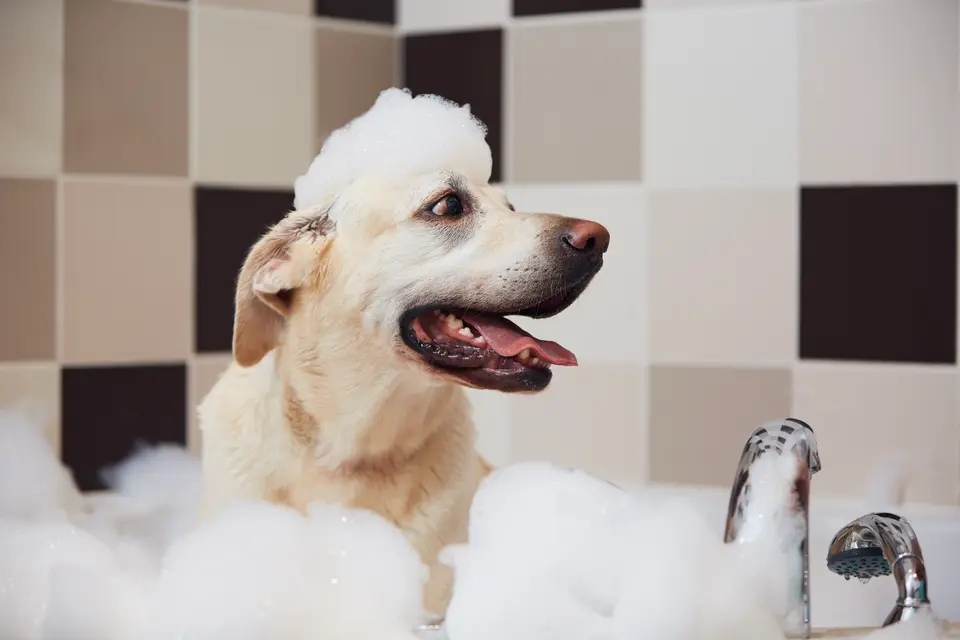
Put a rubber mat or a folded towel in the bottom of the tub. A dog who cannot get a grip tenses up, scrambles and comes to dread the whole process. Have shampoo, a cup or sprayer and towels within reach before the dog goes in.
Dog shampoo only
Human shampoo, dish soap and baby shampoo are the wrong pH for a dog's skin and will dry and irritate it. If your dog has sensitive skin, a hypoallergenic formula is the safe choice, and if your vet has prescribed a medicated shampoo, follow their instructions on how long to leave it on. Dilute it in a cup of water first so it spreads evenly and rinses out faster.
Protect the eyes and ears
The two places a home bath most often goes wrong are the eyes and the ears. Shampoo in the eyes stings; water in the ears sits in the canal and sets the stage for an ear infection, particularly in floppy-eared breeds.
- Wash the body first and the head last, and do the head with a damp washcloth rather than the sprayer.
- Keep shampoo away from the eyes entirely. Wipe the face with a cloth and plain water.
- Do not pour or spray water into the ears. Hold the ear flap flat against the head with your hand while you work around it.
- Dry the ear flaps gently with a towel afterward. Do not push anything into the canal.
This is what we mean when we say every groom includes a humane bath that protects eyes and ears.
Rinse until you are sure, then rinse again
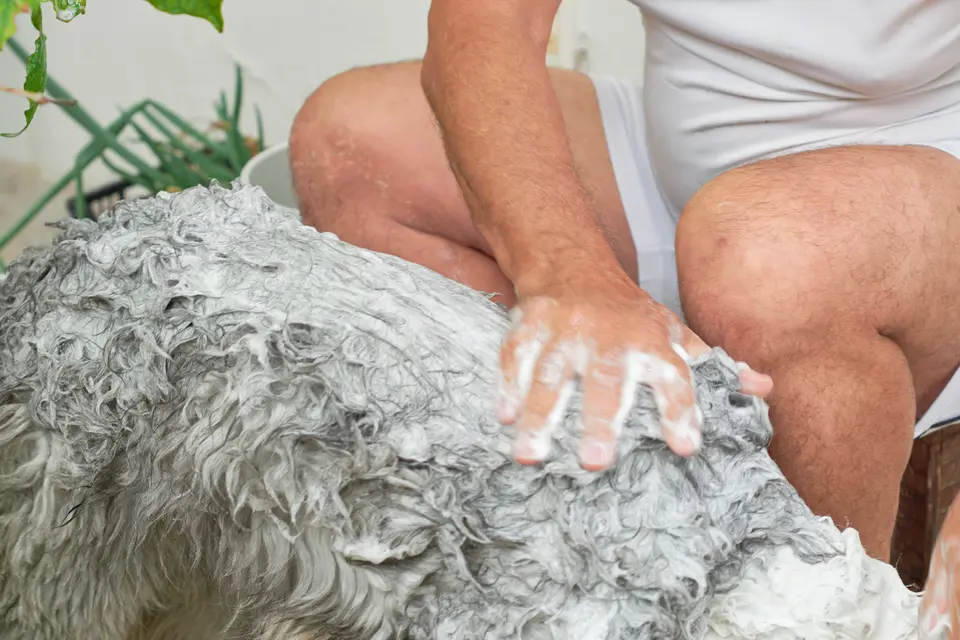
Shampoo left in the coat is the most common cause of itching after a home bath. Rinse from the neck back, lifting the hair and getting right to the skin, until the water runs completely clear and the coat no longer feels slippery. Then do it once more. The belly, the armpits and the base of the tail are where residue hides.
Drying
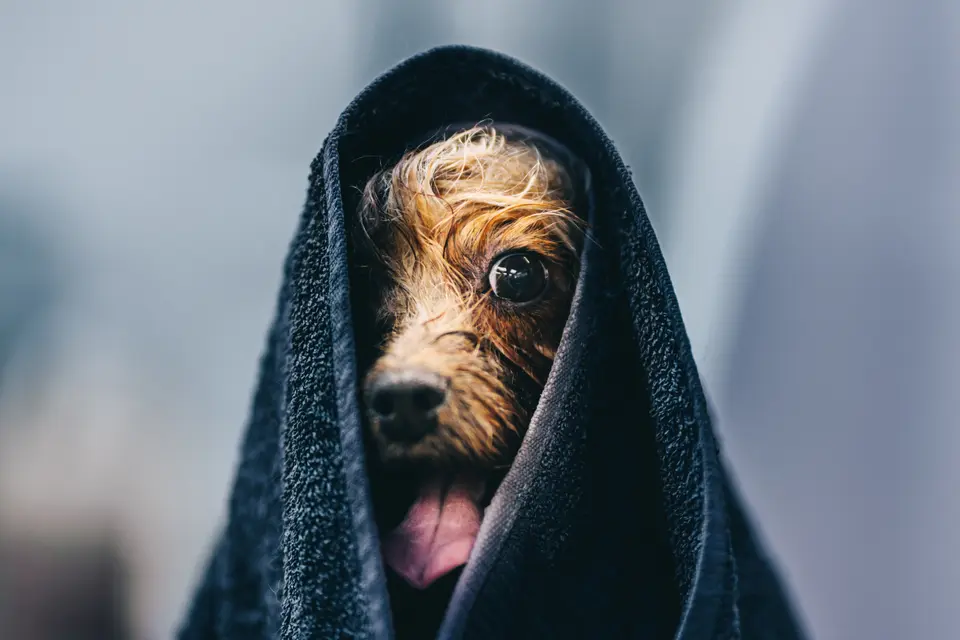
Towel first, squeezing the coat rather than rubbing, which tangles long hair. A thick coat left to air dry can stay damp at the skin for hours, a setup for hot spots and mats. A hair dryer on its lowest heat and speed, held well away from the skin and kept moving, is fine for most dogs if they tolerate the noise. Brush the coat as it dries. In the van we use warm air fluff drying, which is gentler and more thorough than a bathroom dryer.
When to leave it to a professional
Some baths are not a home job. If the coat is matted, if the dog is very anxious or has snapped during a bath before, if the dog is elderly or unsteady and cannot stand safely in a tub, or if the dog is simply too big to control in your bathroom, that is what we are for. Our senior pet grooming page explains how we handle unsteady dogs, and special handling is a $50 add-on for pets who need a muzzle, show anxiety or aggression, cannot stand on their own for more than ten minutes, or have significant health concerns. If a home bath is turning into a struggle, book an appointment instead, and if you have never had a mobile groom before, our article on how to prepare for a mobile grooming appointment explains what to expect when the van pulls into your driveway.