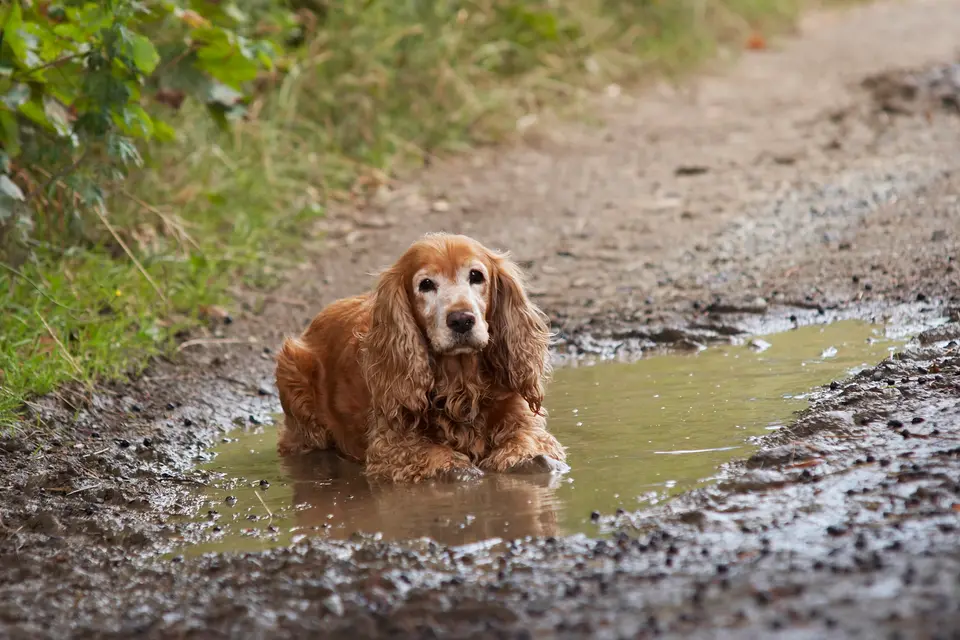
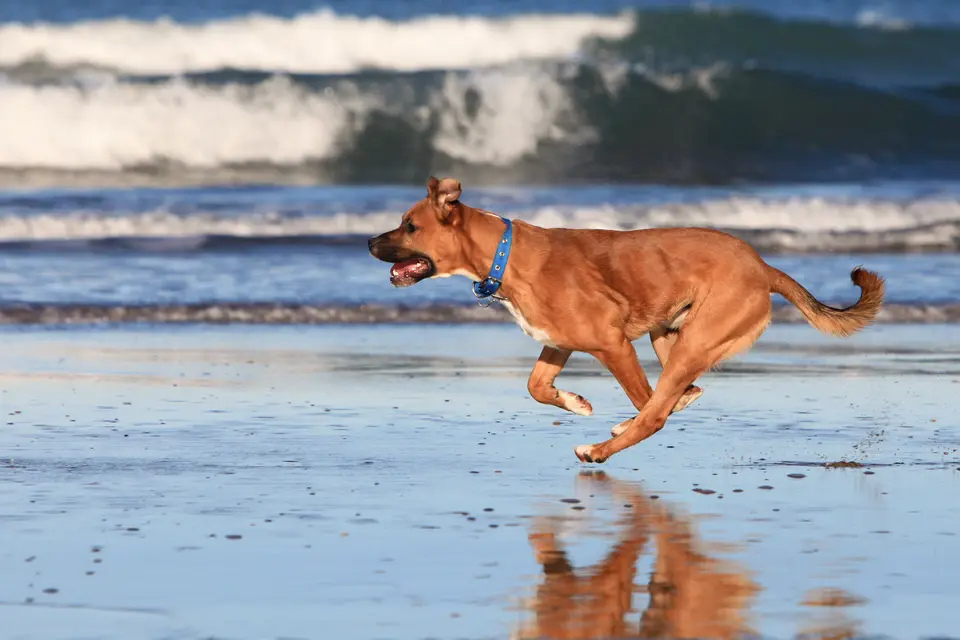
Long Island is a beach place, and a lot of the dogs we groom are beach dogs. A day in the sand and the surf is one of the best things you can give a dog, and we would never talk anyone out of it. But a beach dog comes home carrying a surprising amount of the beach, and the coats we see in the van over the summer tell the story: dry, dull, gritty, and in a long-coated dog, matted everywhere sand and salt collect. A rinse the same day prevents most of it. Here is why, and when a rinse is not enough.
What salt water does to a coat
Salt water pulls moisture out of skin and hair, which is why your own skin feels tight and your hair feels stiff after a swim in the ocean. The same thing happens to a dog, and a dog has far more hair to hold the salt. As the coat dries, salt stays behind on the skin and along the hair. On a short-coated dog that mostly means dry, flaky skin and a coat that loses its shine. On a double-coated dog the salt works down into the undercoat, where it is harder to rinse out. On a curly or long coat, salt-stiffened hair tangles far more readily than clean hair, and once sand is mixed in, those tangles turn into mats quickly.
A dog who swims regularly and never gets rinsed usually shows it within a few weeks: scratching, dandruff, a coat that feels coarse, and sometimes irritated skin in the armpits and groin where salt sits against a fold. If your dog's skin looks red or raw, or is being scratched constantly, that is a question for your vet, not for us. What we can tell you is that most of what we see in summer coats starts with salt that was never washed off.
Sand gets everywhere, and two places matter most
Sand is abrasive. In the coat it grinds against the hair with every step, and in a long coat it becomes the grit at the center of a mat. Two spots deserve attention first:
- Paws. Sand packs between the pads and the toes, and the hair there holds it. Hot sand leaves pads tender, wet sand that dries between them rubs the skin raw, and dogs lick at it, which makes it worse. Spread the toes and look.
- Ears. A dog who shakes off in the surf and then rolls gets sand and salt water inside the ear flap, and floppy or hairy ears trap it. Dry the inside of the flap gently with a towel after the beach, and if you notice a smell, head shaking, or pawing at an ear in the days after, ask your vet.
Dog-friendly beach habits
None of this is a reason to skip the beach. It is a reason to build a few habits around it:
- Bring fresh water and offer it often. A thirsty dog drinks salt water, and salt water upsets a dog's stomach.
- Check the sand temperature in the middle of a hot day. If you cannot hold your hand on it, it is too hot for pads.
- Watch what your dog eats and rolls in. Dead fish and seaweed are irresistible to a dog and good for neither the coat nor the stomach.
- Towel off before the car. It will not get the salt out, but it gets the worst of the sand off for the ride home.
- Check the beach's rules on dogs. Many Long Island beaches allow dogs only in the off-season or in specific areas, and the rules change from town to town.
A rinse at home versus a full bath
After most beach days, a thorough rinse with plain fresh water is enough, and it is the single most useful thing you can do. The goal is to get the salt off the skin and the sand out of the coat before either dries in. Use a hose on gentle pressure or a handheld shower, lukewarm if you can, and keep going until the water runs clear and the coat no longer feels gritty when you run your fingers through it against the grain. Spend longer than you think you need on the undercoat, belly, legs and feet. Dry the ears, dry between the toes, and on a long or curly coat, brush and comb through once the dog is dry, because a wet coat left to dry on its own is how beach tangles set.
A full bath with shampoo is worth it when the dog is noticeably smelly, when the skin feels oily or sticky after the rinse, when they rolled in something, or after several beach days in a row. Shampooing every trip strips oils the skin needs, so save it for when it is earned. If your dog's skin is sensitive, a hypoallergenic shampoo is gentler, and we use one on request in the van.
When the coat needs a professional groom
Some beach coats are past what a rinse can fix. Let us bring the van to you when:
- There are mats you cannot comb through. Sand and salt mats are tight and sit against the skin, and pulling at them hurts. We deal with a matted coat safely, with clippers rather than a brush, as an add-on listed under our extras.
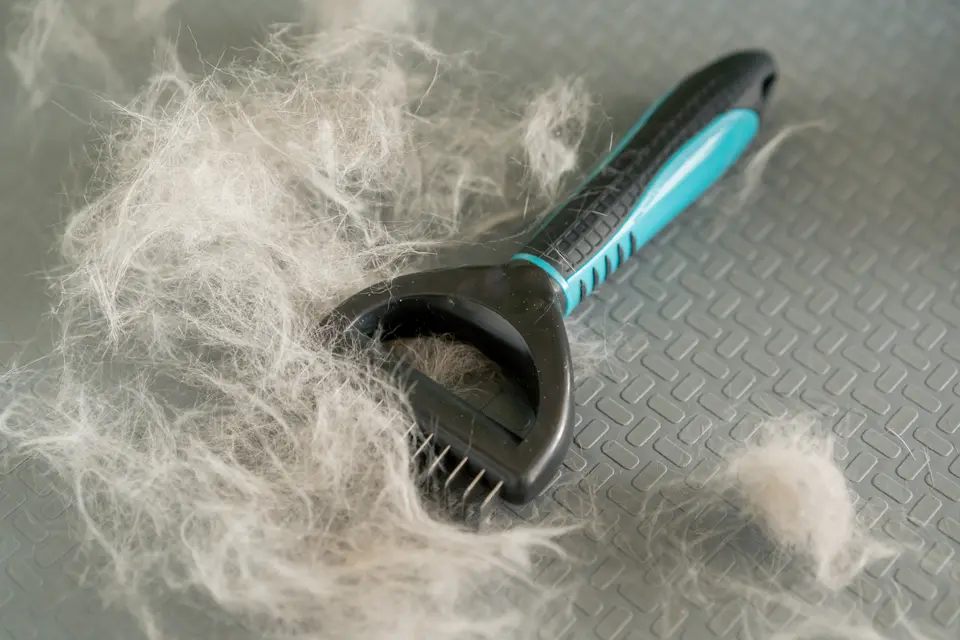
- A double coat is shedding heavily. Salt dries out the undercoat and speeds the summer shed along. A deshedding treatment in the van clears what a brush at home leaves behind.
- The coat is long and has had a few beach weeks. A shorter summer cut on a doodle or a long-coated dog makes every rinse afterward faster and more effective. Our doodle grooming page covers the options.
- Paws and ears need real attention. Every groom includes nails clipped and filed and ears cleaned and deodorized, and we trim the hair between the pads so sand has less to hold onto next time.
Every groom also includes an observation of your dog's general health, and in summer that often means pointing out dry patches, a tender paw or an ear that should be looked at. We will tell you what we noticed; your vet can tell you what it means. Everything a visit includes is on our dog grooming page, and we cover the beach towns of Nassau and western Suffolk, listed on our service area page. Enjoy the beach. Rinse the dog. Call us when the rinse is not enough.