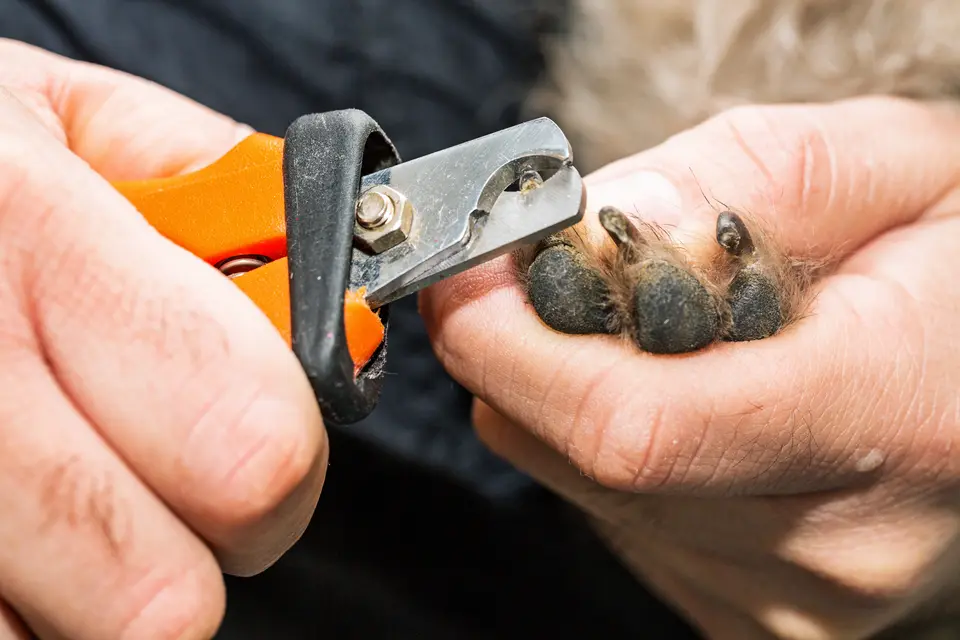
Here is a quick test you can do tonight. Let your dog walk across a hard floor, kitchen tile or hardwood, and listen. If you hear a steady click, click, click, the nails are touching the ground, and they are longer than they should be. A dog with nails at the right length walks almost silently on a hard floor, because the nail clears the surface and the pad takes the weight. That click is the simplest answer to one of the questions we are asked most at Purrfect Paws Mobile Pet Spa: how often should a dog's nails be trimmed? The honest answer is "as often as it takes to keep them quiet," and for most dogs that works out to every three to four weeks.
Why long nails are more than a cosmetic problem
Owners tend to think of nails as a tidiness issue, like a haircut. They are closer to a shoe that no longer fits. When a nail is long enough to hit the floor before the pad does, every step pushes the nail back up into the toe. The dog compensates by shifting weight onto the back of the paw, and over weeks and months that changes posture: the toes splay, the wrists drop, and the whole stance flattens out. Older dogs and dogs with sore joints feel this most.
Long nails also catch. A nail snagged on a rug or a deck board can tear, and a torn nail is painful, bleeds a great deal, and often ends in a vet visit. Dewclaws, the thumb-like nails higher up the leg, never touch the ground, so they never wear down on their own and can curl right back into the skin if nobody checks them. If a nail has grown into the pad or you see bleeding or swelling, that is a question for your vet, not a groomer.
The quick, and why short trims beat one big one
Inside every nail is the quick: the living tissue that carries the blood supply and the nerve. On a white nail you can see it as a pink shadow; on a black nail you cannot see it at all, which is what makes owners nervous about cutting at home. Cut into the quick and the nail bleeds and the dog remembers.
The part most people do not know is that the quick moves. In a dog whose nails have been long for a while, the quick grows out with the nail, so you cannot take the nail back to a good length in one session without hurting the dog. The way to shorten a long quick is to trim a little, often. A small amount off every two to three weeks encourages the quick to recede, and after a few cycles the nail can sit where it belongs. This is the single best argument for regular nail care rather than an occasional heroic session.
Why we file after we clip
Every groom we do includes nails clipped and filed, and the filing is not an afterthought. A freshly clipped nail has a sharp, sometimes splintered edge. Filing rounds that edge off so it does not scratch your floors, your furniture, or your legs when the dog jumps up to say hello. It also lets us bring the nail a little closer to the quick than a clipper safely can, because a file takes off a tiny amount at a time with no risk of a sudden deep cut. Dogs who hate the clipper sometimes tolerate the file well, and for a nervous dog we may do most of the work with the file alone.
Dogs that walk less need it more
A dog who covers a few miles a day on sidewalks wears its nails down naturally and may need very little trimming. Most Long Island dogs are not that dog. A dog who spends its day on carpet and grass, goes out to the yard a few times, and walks around the block once has almost nothing wearing those nails down. Small dogs, apartment dogs, senior dogs, and dogs recovering from an injury fall into this group, and their nails get long fastest. If you are not sure which kind of dog you have, the floor test settles it.
Between visits: what you can do at home
- Handle the paws. A dog who is used to having its feet touched, gently and often, is a far easier dog to trim. Thirty seconds a day with a treat afterward is enough.
- Do the floor test weekly. If the click is back, it is time.
- Check the dewclaws. Look up the inside of each front leg, and sometimes the back legs too.
- If you trim at home, take off less than you think. Tiny amounts, and stop at the first sign of a darker center in the cut surface, which means you are near the quick. If a nail bleeds, styptic powder stops it; keep some in the house.
Nails and ears are part of every groom
You do not need to book a separate nail appointment with us. Nails clipped and filed, along with ears cleaned and deodorized, are included in every groom we do, from a mini groom up, and in our cat grooms as well. Our dog grooming page lists everything a visit includes, and the pricing page has the starting prices by groom type. Because the van parks in your driveway and your dog is the only pet inside, a nail trim happens in a calm space with no waiting and no other animals, which matters a great deal for a dog who guards its feet.
For most dogs, a groom every four to eight weeks keeps the nails where they belong. Dogs who wear their nails down slowly may want a trim in between, and if you would like one, get in touch and we will fit it around your regular visit. If you are working out the right overall schedule for your dog, our guide to grooming frequency covers coat, lifestyle, and the clues your dog gives you.